What is HA?
Home assistant (HA) is a system design protocol that ensures an agreed-upon level of operational performance, usually Uptime, for a higher than normal period.
HA Strategy:
Local Control: The “Privacy” phase. All data processing stays within your physical network. It ensures your home works even if the internet goes down.
Automation Logic: The “Intelligence” phase. This is the integration of sensors, triggers, and actions into a cohesive ecosystem. It transforms standard hardware into a resilient environment.
| Service Tier | Focus & Methodology | Primary Deliverables | Pricing |
|---|---|---|---|
| Foundation (Network) | Enterprise-grade VLAN segmentation, IoT isolation, and Wi-Fi 6/7 optimization. | Secure Network Map & Firewall Configuration. | Fixed Fee (Per Unit) |
| Integration (Standard) | Home Assistant OS deployment, Zigbee/Z-Wave mesh optimization, and core automations. | Local Dashboard & Mobile Access Setup. | Project Based (Device Count) |
| Advanced (Local AI) | Private LLM integration, NVR with local object detection, and 100% Air-Gapped control. | System Documentation & Disaster Recovery Plan. | Consultative (Value-Based) |
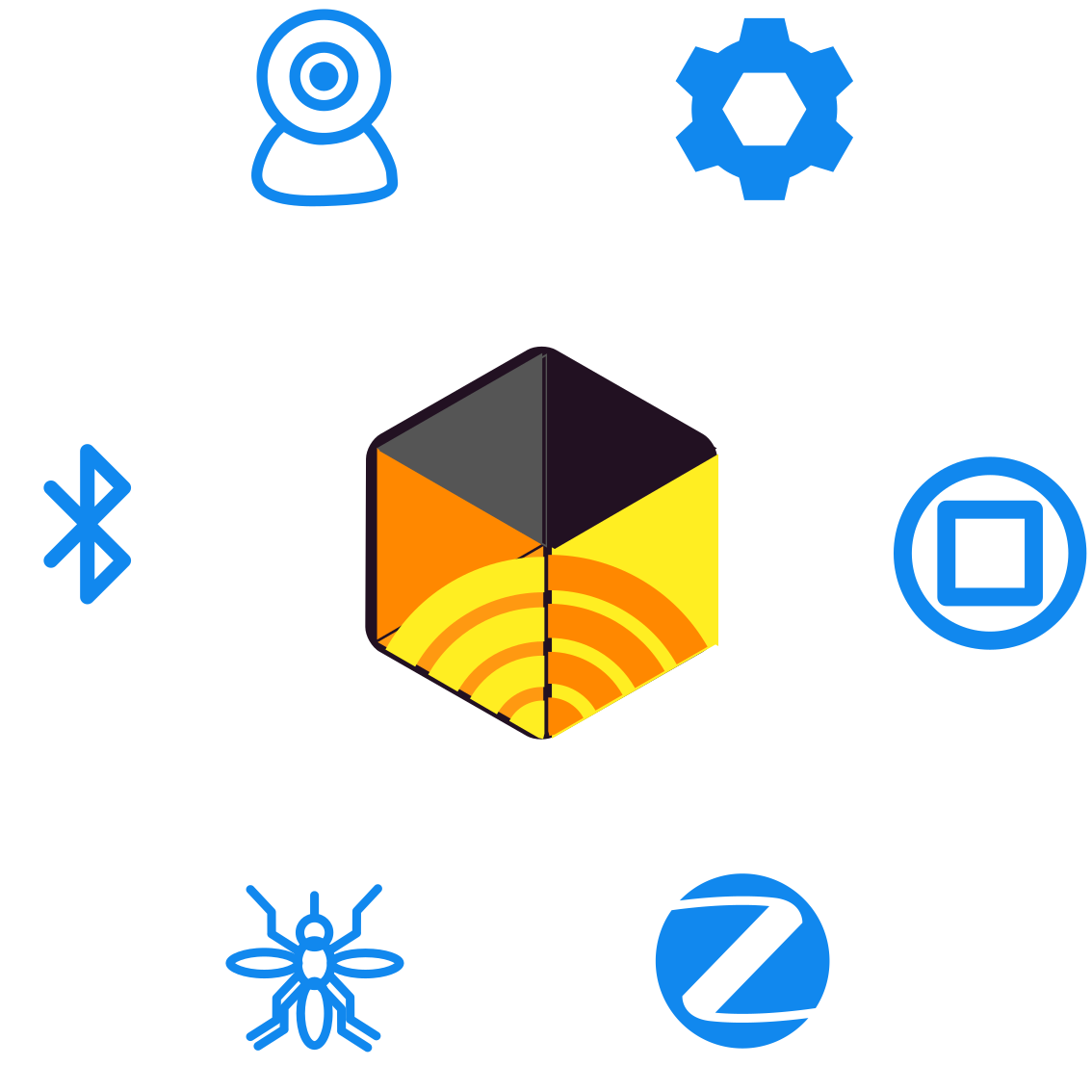
The Lifecycle of a Secure Smart Home
Phase 1: Infrastructure & Scoping
Download gfxtm’s Assessment Spreadsheet
Assessment Guide explains how to enter data, how the sheets are structured, and how results are interpreted.
Network Hardening: Implementing strict firewall rules to ensure IoT devices cannot reach the internet or your private computers.
Protocol Strategy: Designing a robust mesh network using Zigbee, Z-Wave, or Matter to reduce 2.4GHz Wi-Fi interference.
Hardware Selection: Provisioning dedicated, low-power hardware (NUC, Raspberry Pi 5, or Home Assistant Green/Yellow) for 24/7 uptime.
Phase 2: Integration & Automation
Dashboard Customization: Creating intuitive, fast-loading interfaces for wall-mounted tablets and mobile devices.
Logic Engine: Developing complex automations (Blueprints and YAML) that react to presence, light levels, and occupancy without external API calls.
Secure Remote Access: Implementing encrypted WireGuard VPN or Cloudflare Tunnels for secure access without opening risky router ports.
Phase 3: Maintenance & Resilience
Automated Backups: Configuring daily encrypted backups to off-site or NAS storage.
Security Audits: Regular firmware updates for devices and the HA core to mitigate newly discovered CVEs.
System Monitoring: Real-time health checks on sensor battery levels and network throughput.
Engagement Scoping Variables
To provide an accurate estimate, final engagement fees are based on the following:
Node Density: Total count of physical sensors, switches, and smart appliances.
Media Integration: Integration with high-fidelity audio or local NVR video feeds (Frigate/Reolink).
Automation Complexity: Requirement for advanced logic (e.g., adaptive lighting, energy monitoring, or AI-driven voice assistants).
Redundancy Requirements: Implementation of Uninterruptible Power Supplies (UPS) and failover hardware.
Note: Understand our methodology & assessment terms.
For specialized automation architectures, including Healthcare (HAH) and Home Assistant (HA) environmental monitoring, see our Automation & Integration Practice.